About our lab
The Caillier Lab studies how cells move, squeeze, and navigate through the tight and complex environments of the body. We focus on amoeboid migration, a fast and highly adaptable form of cell movement that is essential for processes such as immune surveillance, but can also be hijacked in disease, notably by invasive cancer cells.
Our research lies at the intersection of cell biology and mechanics. We build controlled environments that recreate key features of tissues, adding one layer of complexity at a time to uncover how each feature influences cell behavior. This approach bridges the gap between simplified Petri dishes and complex animal models, while preserving the resolution needed to precisely measure how cells interact with their surroundings.
Using quantitative mechanobiology, we investigate how cells generate forces, sense their mechanical environment, and adapt the way they move as their surroundings become more complex. Ultimately, we aim to uncover the fundamental mechanical principles that allow amoeboid cells to navigate healthy and diseased tissues.
Core research pillars
01. Cell Mechanics
How cells generate forces to move and squeeze through tissues.
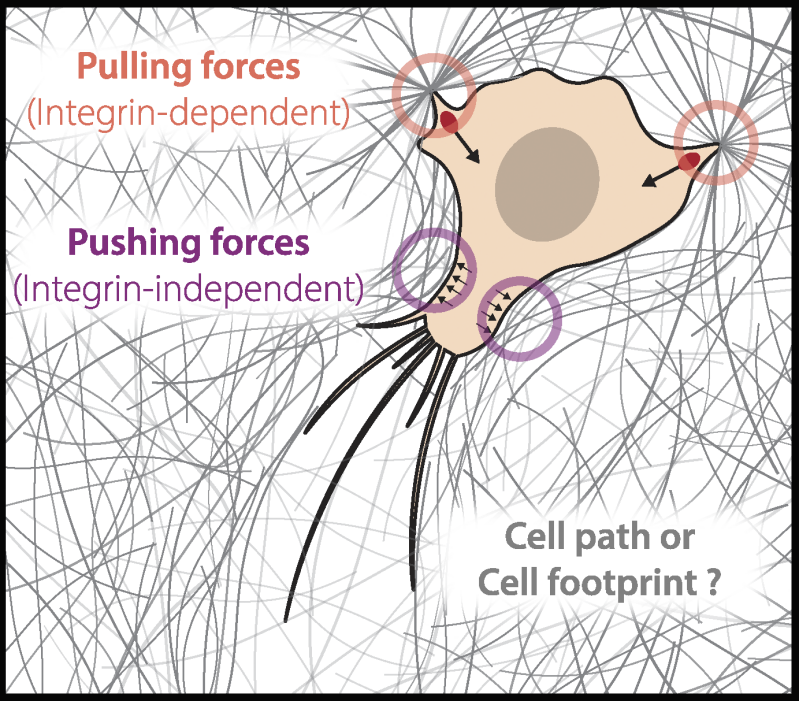
Amoeboid T cells generate distinct pulling and pushing forces during confined migration. Pulling forces colocalize with vinculin-rich adhesions, while pushing forces outline the cell body.
02. Cell Plasticity
How amoeboid cells adapt their migration strategies as they move through complex environments.
Amoeboid cells can adopt very different shapes and migration behaviors, dynamically changing how they move over time.
03. Cell Environment
How the physical organization and mechanical properties of tissues influence cell behavior.
Cells can modify their environment as they migrate, creating paths that facilitate their own movement and can be reused by other cells.

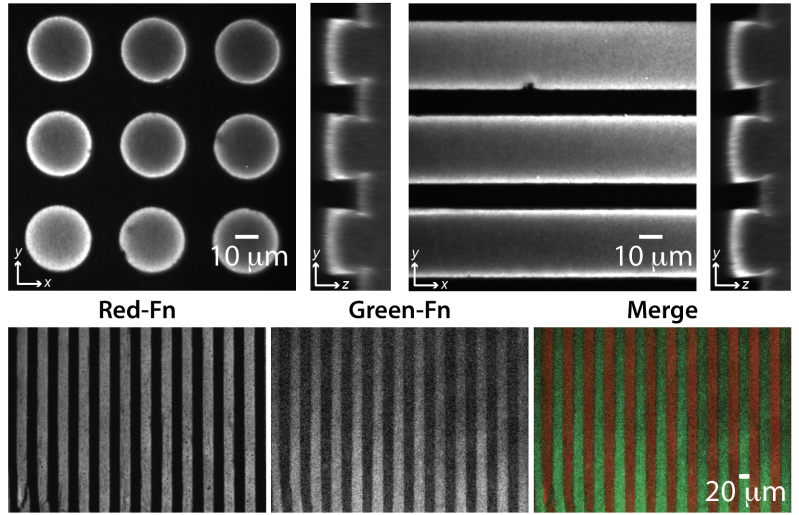
The organization of the extracellular matrix can guide cell migration, with cells changing their behavior as they encounter different adhesive environments.

Our techniques
01. Quantitative Force Microscopy
Traction force microscopy (TFM) • Double-sided TFM

02. Microengineered Platforms
Confinement • Soft lithography • Microfluidics

03. Controlled Microenvironments
Micropatterning • Tunable stiffness • Defined geometries